
I. Introduction
A patent gives its owner the right to block others from making, using, or selling the patented invention.[1] Academic research often uses patented technologies or builds on patented techniques, frequently involving some act of making or using a patented invention.[2] Because patent law contains no exception for non-profit use or socially beneficial “fair use,”[3] these researchers must obtain a license from the upstream patentee.[4] Patents, therefore, could, at least in theory, impede research, particularly in the academic context where there are fewer resources to cut through patent thickets. Scholars suggest that, given the current realities of the patent system, “it is difficult to see how professors could successfully perform any meaningful research without infringing patents.”[5]
The problem of how patents affect academic researchers has attracted considerable scholarly attention, but legal scholars are split on the magnitude of patents’ potential impact. One camp is deeply concerned that patents will stifle research, believing that overly strong patent rights could hobble the academic enterprise.[6] This view dominated after the Federal Circuit’s 2002 decision in Madey v. Duke University,[7] which held that a university was not exempt from liability for patent infringement and essentially eliminated the research exemption to patent infringement, which had previously been thought to exempt university researchers from liability for infringement.[8] After Madey, scholars predicted dire consequences: “[R]esearch institutions . . . will be at the mercy of patent holders”;[9] the “legal edifice on which modern academic research is based” (i.e., experimental use of patented technologies) will “beg[i]n to crumble”;[10] it will be “difficult, if not impossible, for university researchers to rely on [the experimental use] defense in patent infringement suits”;[11] and it will have “disastrous” consequences.[12]
A researcher at Washington University said, “the legal threat is . . . worrisome: ‘Wouldn’t it be terrible if you had to consult a lawyer before you could do an experiment?’”[13]
A second group of scholars argued that patents (and Madey) have no impact on university research because researchers simply ignore patents.[14] The only empirical studies on the question—surveys of academic researchers—have substantiated the view that researchers ignore patents and that patents therefore have little or no impact on university research.[15] In the words of one scientist, “[patent infringement is] something we don’t think about . . . [b]asic scientists who use [patented compounds] aren’t violating the patent for profit . . . so I can’t imagine that they would have any liability.”[16]
This Article adds a piece of empirical evidence to the debate by studying the example of polymerase chain reaction (PCR) technology. PCR is one of the most important biotechnology tools developed in the past century and is used universally across academic institutions in biology.[17] In the early 1990s, PCR was involved in patent litigation. The lawsuit was between two companies, both of which sold Taq polymerase, an essential component of PCR, to scientists.[18] Roche, the plaintiff, held the patent on Taq; Promega, the defendant, sold a cheaper version of Taq.[19] Academic researchers who had purchased and used Promega’s Taq were individually named (but not sued) as patent infringers.[20] This Article shows that academics adjusted their behavior in response to the PCR lawsuit, moving towards Roche’s more expensive Taq after Roche identified academic infringers—but not when the lawsuit against Promega was filed. This is evidence that university researchers were enormously sensitive to patents, even before Madey.
This Article begins with an overview of patent law and research exceptions for academics, including the demise of the common law research exception (Part I). The Article then presents a case study on PCR litigation and shows that university researchers cared about patents, at least in this context (Part II). The Article concludes with implications of the case study for the research exception (Part III).
II. Academic Research Can Be Patent Infringement
This Part sets the stage for the case study by explaining why academics might be concerned about patent infringement (Section A) and summarizing the debate around whether there should be a research exception to patent infringement (Section B).
A. Patent Infringement
The purpose of patents is to incentivize innovation by providing inventors exclusive rights over their inventions during the life of the patent.[21] This is a straightforward model if innovation in an area is a one-time event. Innovation is, of course, not a one-time event: it occurs iteratively. A first inventor makes a discovery, a second inventor builds on this discovery, and so on, with each subsequent innovation bringing some potential benefit to society.[22]
The tension between upstream and downstream research is particularly acute in the biomedical sciences. Upstream patents can be broad—covering, for example, basic tools used in research such as microscopes, software, or assay methods.[23] They are also dense—creating thickets of overlapping patents such that a researcher might need to license multiple patents from multiple owners before beginning a project.[24] Against this backdrop, university researchers who are starved for funds, and do not have patent lawyers on call, may have trouble navigating the patent landscape and may struggle to avoid infringement.[25]
Despite these difficulties, university researchers evidently do manage to produce research. One widespread explanation is that academic researchers simply ignore patents.[26] Professor Eisenberg explains that “many academic researchers seem to be either oblivious to the patents they might be infringing or unconcerned about potential infringement liability.”[27] Professors Sarnoff and Holman agree that “there remains a widespread practice of what . . . can now only be considered infringing research.”[28]
While some researcher behavior is attributable to ignorance–“[scientists] might not be aware of the legal implications of making or using patented [products]”[29]—it also occurs when academic scientists are aware of patents but believe that the patents do not apply to them.[30] As evidenced by the words of one scientist, there is a mistaken impression that lack of profit translates to lack of liability: ‘"[Patent infringement is] something we don’t think about’ . . . . Basic scientists who use [patented compounds] ‘aren’t violating the patent for profit . . . so I can’t imagine that they would have any liability.’"[31]
Finally, some academic scientists understand that they are infringing a patent but choose to do so regardless under the belief that the patent should not apply to them. For example, when DuPont began demanding licenses from academic researchers who used its patented oncomouse technology, “[s]ome scientists responded with ‘civil disobedience,’ willfully ignoring the patent while creating their own mice and lobbying their universities to refuse to sign the DuPont agreement.”[32]
Academic researchers who ignore patents face relatively little risk, as many patent owners report reluctance to sue academic researchers.[33] This results partly from fear of bad publicity.[34] It is also due to the economics of patent lawsuits: A suit may cost millions of dollars,[35] while the available remedy—either an injunction[36] or lost profits/reasonable royalty[37]—is unlikely to come close to the cost of litigation.[38] Despite this, many researchers report being concerned about patent infringement.[39]
B. Research Exceptions
Patent infringement, as defined in Title 35 of the U.S. Code, occurs whenever one “makes, uses, offers to sell, or sells any patented invention.”[40] This encompasses a wide range of actions, and there has been historical recognition that it is socially desirable to exempt at least some forms of research from patent infringement. Justice Story, writing in 1813, stated that, “it could never have been the intention of the legislature to punish a man, who constructed such a machine merely for philosophical experiments, or for the purpose of ascertaining the sufficiency of the machine to produce its described effects.”[41]
Over time, Justice Story’s statement became known as the experimental use defense.[42] Although the experimental use defense has been sparingly applied to immunize university researchers from liability,[43] the general perception was that the experimental use defense exempted university researchers from liability as long as they were not seeking to profit from their research.[44]
In light of this belief, academic researchers were shocked when, in 2002, the Federal Circuit held that university research could, and did, constitute patent infringement.[45] In Madey v. Duke University, the university built a lab for Professor John Madey containing several pieces of equipment covered by patents owned by Madey.[46] Madey later left Duke, but the university continued to use the equipment for research.[47] Madey sued Duke for patent infringement.[48] Duke argued that its use of the patented equipment was protected by the research exemption.[49] The district court found for Duke on summary judgment, holding that Madey had not established that Duke’s use of the patent was for “commercial purposes.”[50]
The Federal Circuit reversed, explaining that the proper inquiry is whether the research is conducted “in keeping with the alleged infringer’s legitimate business, regardless of commercial implications.”[51] Duke, like other research universities, undertook research projects to “further the institution’s legitimate business objectives, including educating and enlightening students and faculty . . . [and] to increase the status of the institution and lure lucrative research grants, students and faculty.”[52]
Universities conducting research were furthering their business objectives and, therefore, not eligible to use the experimental use defense.[53]
Although Madey never outright stated that the experimental use exemption did not apply to universities, many drew that conclusion[54] and were concerned about the decision’s effect on academic research.[55] For instance, the Association of American Medical Colleges was “gravely concerned” that Madey would “encourage patent holders to assert claims in a manner that will . . . altogether frustrate university scientists’ ability to make further basic advances in critical areas of biotechnology and biomedicine.”[56]
Since Madey, university researchers may be liable for patent infringement. A later case, Merck v. Integra, interpreted a statute to exempt from patent infringement uses of patented compounds “‘reasonably related’ to the process of developing information for submission” to the FDA.[57] The exception covers preclinical studies, including tests of drugs that are never submitted for regulatory approval or that generate information that is left out of regulatory submissions[58] and may, in some circumstances, cover university research.[59] Researchers at state universities may also be exempt from patent infringement under doctrines of sovereign immunity.[60]
III. PCR: A Case Study
The doctrine of patent infringement for academic research has been largely settled since the Supreme Court decided Merck in 2005. But there is still an active debate about the wisdom of curtailing the research exception and about the effect of patents on academic research. This Part offers a case study as empirical evidence on those questions.
As a threshold question, it is important to understand if university researchers are sensitive to patent rights. If researchers entirely ignore patents—which is generally thought to be the case,[61] possibly even after Madey—then they would presumably not respond to changes in patent law.[62] To study researcher sensitivity to patent rights, I sought instances where university researchers were involved in patent litigation, reasoning that researchers (even those not involved in the specific case) would be most likely to be aware of and respond to a patent right in this situation. Because the complicated nomenclature of patent claims makes it difficult to identify infringement on a large scale,[63] I further sought instances where it was possible to easily identify potentially infringing behavior. The situation that best fit those criteria was the controversy around use of PCR technology.
This Part begins by introducing PCR technology and associated patent litigation (Section A), it then sets out the case study’s methodology (Section B) and results (Section C).
A. PCR: Technology and Litigation
PCR allows researchers to make millions or billions of copies of a particular sequence of DNA, which in turn enables researchers to pick out that specific sequence from a larger sample of DNA.[64] PCR technology made possible an enormous range of applications, such as paternity testing, cloning, disease diagnosis, forensic DNA work, and the creation of genetically modified organisms.[65] The inventor of PCR won the Nobel Prize in 1993[66] and Taq polymerase, the key enzyme in the PCR reaction, was selected as “Molecule of the Year” by Science magazine.[67]
PCR technology was developed and patented by Cetus Corporation in 1983 and licensed to Hoffmann-LaRoche (now known as Roche).[68] Roche (through its licensee Perkin-Elmer) sold PCR kits to scientists.[69] In 1992, Roche sued Promega Corporation—which also sold PCR kits to scientists[70]—for patent infringement.[71] Promega had a license from Roche to sell Taq polymerase for purposes other than PCR.[72] However, scientists who bought Taq from Promega could use it for PCR reactions—and Promega Taq was less than half the price of Roche/Perkin Taq.[73] Though this use was not permitted by the Roche-Promega license, it was a common practice:
Although . . . [Promega is] careful never to mention PCR in their promotional material, it’s an open secret that up to 85% of their sales are to customers who use the enzymes for PCR. As a senior executive [of a company that sold Taq] told Science, researchers certainly don’t purchase large quantities of Taq polymerase “for sweetening their tea.”[74]
At first, the lawsuit appeared to be just another dispute between two large companies and not one that would affect university researchers. But in 1995, Roche dropped a bomb on university researchers’ complacency. Roche gave the court a list of 200 university researchers who were allegedly infringing the PCR patents.[75] Although Roche stated that it did not plan to sue the researchers, university scientists were alarmed by both the possibility of being sued in this specific case and the prospect that patent enforcement would diminish academic freedom to ignore patent rights.[76] At a press conference on the issue, Nobel Laureate Arthur Kornberg summed up the reaction from academic researchers: “Governments, universities and private institutions that pursue knowledge for its own sake and publish freely [must now worry about] whether every tool, every operation, every reagent, is under some patent.”[77]
Some researchers said that Roche’s tactic would cause them to switch away from Promega,[78] while others remained unconcerned,[79] in part due to their belief that university researchers were not liable for patent infringement.[80]
Given that Roche’s suit occurred before Madey, in an environment where academic researchers were widely believed to ignore patents, did university scientists change their behavior in response to the suit? Below, I empirically explore that question and find that the answer is yes: university scientists reacted strongly to Roche’s suit.
B. Methodology
When scientists use a material in an experiment, the source of that material is generally listed in the materials and methods section of the resulting paper. Thus, a scientist who uses Roche’s PCR kit (produced by Perkin-Elmer) would record either Roche or Perkin-Elmer’s name (e.g., “0.5 μL Taq polymerase (1.25 U/μL AmpliTaq Gold DNA polymerase, PerkinElmer)”)[81] while a scientist who uses Promega’s enzyme would use Promega’s name (e.g., “PCR fragment . . . was amplified using Promega Taq polymerase”).[82] Indeed, this method was used by Roche to identify alleged infringers in its lawsuit against Promega.[83] If university researchers are sensitive to patent rights, Roche’s suit should result in fewer mentions of Promega in papers published by universities—either because researchers stopped using Promega’s Taq or because they stopped disclosing Promega as their source of Taq.
I sought to collect all papers and patents that recorded use of PCR technology from either Roche or Promega. To collect keywords for searching papers and patents, I conducted a Google Scholar search for (Taq AND (PCR or “polymerase chain reaction”)) and, for each year from 1990 to 2010, manually reviewed the first five pages of results and recorded how each reference referred to Roche or Promega Taq products. I curated the list of terms to remove terms that might return results other than the Taq enzyme (for example, a search for “promega Taq polymerase” will also return papers that used Promega’s Taq polymerase buffer—a product not covered by the patents’ claims).[84]
I searched for Roche terms[85] and Promega terms[86] using EBSCO’s Medline database, searching the “full text” field. The search was limited to papers published between 1990 and 2010 and to papers published in journals (excluding books and magazines). The search returned 3,331 results for the Roche search and 3,327 results for the Promega search. Medline provides publication year and PubMed IDs for each paper. I obtained publication years, journal names, and author addresses from PubMed. I assigned papers to countries based on the location of the first author. I manually classified papers as academic or private based on the affiliation of the first author.
I then searched for the same terms using PatSnap’s patent database, searching the full text of the patent specification and claims and restricting the search to U.S. patents and applications. I downloaded information on IPC codes, family members, forward and backward cites, assignees, and inventor addresses from PatSnap. I obtained priority date information from Google Patents, which I used to restrict the same to patents/applications with a priority date between 1990 and 2010. I used assignee information to classify patents as belonging to universities or other research institutions.[87] Patents were classified by country based on the country of residence of the first inventor.
C. Results and Discussion
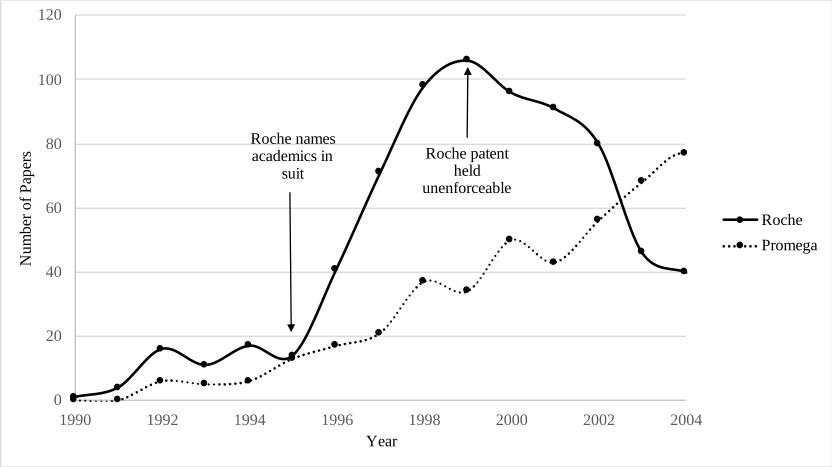
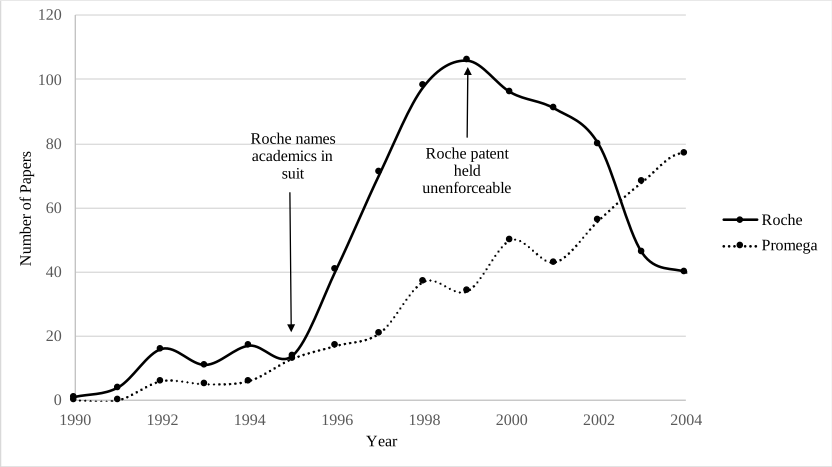
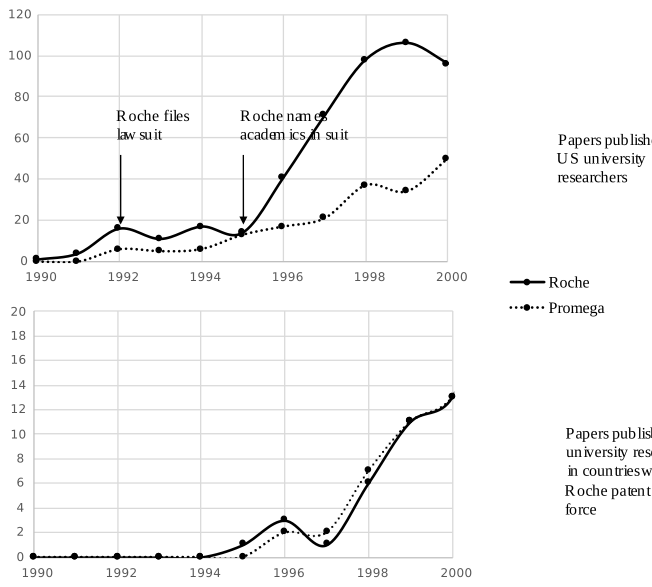
Figure 1 plots the number of PCR papers published each year by U.S. academic scientists, divided by whether the paper mentions Roche’s Taq polymerase or Promega’s Taq polymerase.[88] Before 1995—the year that Roche listed the names of allegedly infringing academic scientists—use of Roche’s Taq and Promega’s Taq rise relatively in parallel.[89] After 1995, the number of papers citing Roche rise dramatically, while Promega papers rise considerably more slowly. The data are consistent with a patent effect: Academic scientists switch from Promega’s Taq to Roche’s Taq (or stop naming Promega in papers) after a perceived patent threat.
The district court litigation concluded in 1999, with the court holding one of Roche’s Taq patents unenforceable due to inequitable conduct.[90] This was not the end of the case—the district court’s finding was appealed to the Federal Circuit[91] and the ruling did not impact other Roche patents covering PCR[92]—but it may as well have been. Headlines in scientific journals proclaimed “Taq Polymerase Patent Ruled Invalid”[93] and academic scientists abandon Roche and return to Promega. Immediately after 1999, the number of academic papers citing Roche Taq drops precipitously, while mentions of Promega Taq continue to rise.
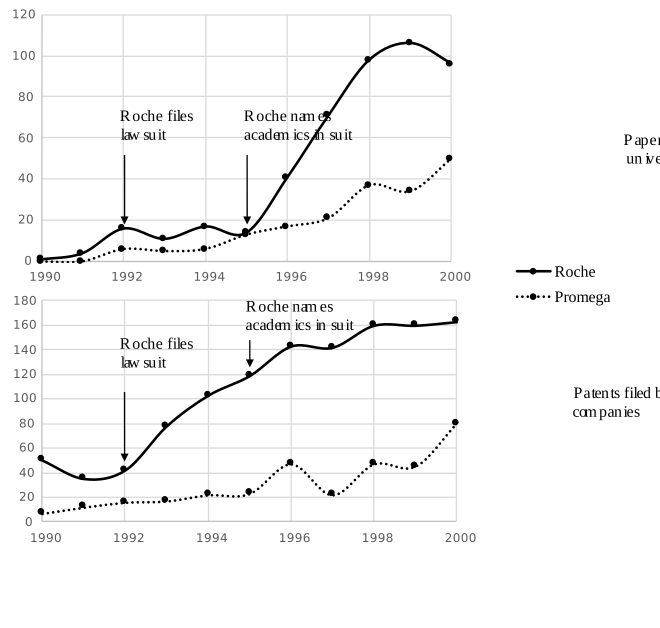
As an additional verification that the increase in university papers citing Roche’s Taq polymerase was caused by Roche’s perceived threat to academics, I compare the reaction of university researchers to the reaction of researchers at companies. Because researchers at companies are considerably less likely to publish their results in peer-reviewed journals, I repeated the methodology outlined above for patents (rather than papers) filed by companies.[94] Figure 2, below, compares mentions of Roche and Promega’s Taq polymerase in university papers (Figure 2(a)) and company patents (Figure 2(b)).
In contrast to universities, companies do not mention Roche’s Taq polymerase at higher rates after 1995. However, there is a notable rise in the number of patents citing Roche’s Taq polymerase in 1992—the year that Roche filed its patent infringement lawsuit against Promega.[95] There is no comparable rise for university papers in 1992. This suggests that companies changed their behavior to avoid infringement the year that the lawsuit was filed against Promega, when companies perceived a threat of patent enforcement. Universities, conversely, did not perceive a threat of enforcement in 1992, but did perceive such a threat in 1995 and consequently reacted in 1995.
_published_filed_between_1990_an.svg)
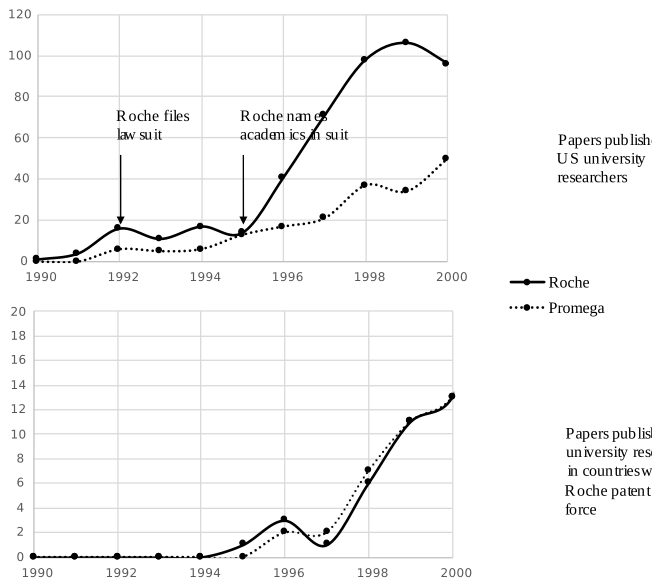
As a final robustness check, I compared papers published by U.S. university researchers to papers published by university researchers in countries where Roche did not have a patent on Taq polymerase.[96] As seen in Figure 3, time trends for mentions of Roche’s product and Promega’s product are very similar in jurisdictions where Roche did not have a patent—a strong contrast with the United States. This suggests that the patent—and its enforcement—is driving U.S. university researcher response.
This study has limitations. It cannot determine whether researchers switched from Promega to Roche, or simply stopped mentioning their polymerase brand, or began inaccurately reporting brands. Further, this study focuses on one technology and one case; it may not be generalized to other situations.
IV. Discussion
On its face, it is perhaps predictable that the threat of a patent lawsuit will motivate potential infringers to move to a more expensive, but non-infringing alternative product. But the result is surprising. University researchers were broadly thought to ignore patents in the pre-2002, pre-Madey world.[97] Here, they do not. Further, it is not at all clear that a suit by Roche against university researchers would have been successful—after all, academic scientists were still protected by the pre-Madey experimental use defense.[98] In addition, university researchers believed that they were immune from suit. Finally, Roche stated publicly that it had no plans to sue academic researchers—and, while it could have reversed itself, doing so would have brought enormously bad publicity, an important consideration for private firms considering suing universities.[99] In short, university researchers are strongly influenced by the possibility of patent infringement even when they were not sued, would not be sued, and thought they could not be sued.
A. Implications for Academic Research After Madey and Merck
The Federal Circuit’s decision in Madey v. Duke University, finding a university liable for patent infringement, sent shockwaves through the academic community.[100] There were two dominant schools of thought on the effect of Madey. The first predicted that there would be a drastic change in the behavior of academic researchers as they grappled with new questions of patent liability.[101] The second predicted no effect, because researchers ignore patents.[102] There are no studies directly testing the effect of Madey, so the question of its effect remains largely unresolved. This study also does not directly test the effect of Madey, but it nonetheless has implications for the effect of the case.
First, the PCR case happened before Madey.[103] Scholars studying Madey start from the proposition that, before Madey, academic researchers ignored patents and were not threatened with patent liability.[104] That is incorrect in the PCR context. When academic users were named in a patent infringement case, there was a massive switch from the infringing product to the non-infringing product.[105] Thus, even before Madey, academics were indeed sensitive to the prospect of patent infringement, at least in certain circumstances. However, Madey may have had an effect. This Article suggests that making academic researchers aware that they might be infringing a patent causes them to move away from activity that might infringe. Madey was well-publicized among academics, with discussion of the case in journals read by scientists, so it is plausible that scientists were aware of the case and reacted.[106]
Yet Madey applied specifically to only one technology—and it was not one in widespread use. Thus, it differs from the PCR case, which directly applied to a technology that many researchers were using.[107] It is notoriously difficult to know whether there are patents in a particular area and whether a given technology infringes on these patents.[108] Academic researchers may have been aware of Madey but may not have translated the decision to their own work or been able to ascertain whether their own work infringed. Thus, Madey may not have had an effect. In sum, though this study does not determine the effect of Madey on academic research, it does provide a different starting point for the analysis and contradicts previous assumptions that researchers pre-Madey ignored patents.
The second view of Madey in the literature is that it did not have an effect because researchers, even post-Madey, ignored patents. This conclusion is predominantly derived from a report funded by the National Academy of Science’s Committee on Intellectual Property Rights in Genomic and Protein-Related Inventions that surveyed 507 researchers in industry, university, nonprofit, and government labs and found that only 1% of academics delayed a project because of patents and none had stopped a project for that reason.[109] The authors attribute this low effect to ignorance, finding that only 5% of academic respondents check for patents regularly.[110] In a related study, the authors found that number little changed after Madey: Only 2% of respondents had begun searching for patents after the case.[111] The authors concluded that “our results suggest that infringement remains of only slight concern [to academic researchers].”[112] This study has been cited repeatedly as evidence that the potential for patent infringement does not concern academic researchers.[113] Other surveys, including a report commissioned by the American Association for the Advancement of Science and another for the National Research Council, similarly found no effect.[114]
The results presented here do not completely contradict these studies, which allow that patents can have an effect in some circumstances, such as aggressive enforcement.[115] However, this nuance is often lost in citation, with the discussion being reduced to a general conclusion that university researchers ignore patents and thus that Madey did not matter. By presenting clear empirical evidence that research does not ignore patents, at least in certain (perhaps limited) circumstances, this Article lends nuance to that conclusion. Researchers did not ignore patents in the PCR case, and, given that they did not ignore patents in 1995, pre-Madey, it is unlikely that researchers ignore patents post-Madey, as intellectual property rights are now easier to enforce against academics.
What of Merck? Merck made it harder to find academic infringers liable because at least some academic research would fall into the statutory research exemption.[116] But given that the PCR case happened when academic researchers thought they could not be sued, it’s not clear that changing the parameters on when they can be sued to (at least for some) back to pre-Madey would make any difference. Overall, this study paints a very different picture from the previous consensus that researchers either ignored patents pre-Madey (and thus might also do so post-Merck) or that researchers always ignored patents and that Madey didn’t matter. Further, although this study looks only at one example of patent enforcement and is therefore necessarily limited in the conclusions it can draw, there are other instances where patent holders have threatened academics, suggesting that the results of this study may apply beyond the specific case.
V. Conclusion
This Article presents results from just one case and no broader answers about the research exception to patent infringement. Further, academics’ relationship to patents has changed significantly in the decades since the PCR litigation. Academics and universities are now much more likely to file their own patents,[117] which may increase both their understanding of patent law and their awareness of others’ patents.
Nonetheless, because empirical evidence is hard to come by in the context of academic scientists’ use of patented technology, this study provides a useful data point for scholars and policymakers investigating the impact of patents on academic research, academics’ response to patent law, and the costs and benefits of a research exception to patent infringement.
35 U.S.C §§ 271(a)–(b), 283.
See Mark A. Lemley, Ignoring Patents, 2008 Mich. State L. Rev. 19, 21.
Fair use is a frequently invoked exception in copyright law. 17 U.S.C. § 107; Google LLC v. Oracle Am., Inc., 114 S. Ct. 1183, 1196 (2021).
Critina Weschler, The Informal Experimental Use Exception: University Research After Madey v. Duke University, 79 N.Y.U. L. Rev. 1536, 1545 (2004); Janet Freilich, Paths to Downstream Innovation, 55 U.C. Davis L. Rev. 2209, 2234 (2022). State universities are likely not liable for patent infringement under the doctrine of sovereign immunity. See Fla. Prepaid Postsecondary Educ. Expense Bd. v. Coll. Sav. Bank, 527 U.S. 627, 630 (1999).
Amy Yancey & C Neal Stewart Jr., Are University Researchers at Risk for Patent Infringement?, 25 Nat. Biotechnol. 1225, 1225–27 (2007).
See, e.g., David G. Sewell, Rescuing Science from the Courts: An Appeal for Amending the Patent Code to Protect Academic Research in the Wake of Madey v. Duke University, 93 Geo. L.J. 759, 769 (2005) (arguing that the Madey decision is bad policy because it “threatens to chill academic research”).
See Elizabeth A. Rowe, The Experimental Use Exception to Patent Infringement: Do Universities Deserve Special Treatment?, 57 Hastings L.J. 921, 922, 930–31 (2006).
Madey v. Duke Univ., 307 F.3d 1351, 1355, 1362, 1364 (Fed. Cir. 2002).
Jennifer Miller, Sealing the Coffin on the Experimental Use Exception, Duke L. & Tech. Rev., no.1, 2003, https://scholarship.law.duke.edu/cgi/viewcontent.cgi?article=108 1&context=dltr [https://perma.cc/KC6Q-52Y4].
Sewell, supra note 6, at 759.
Weschler, supra note 4, at 1537.
David Malakoff, Universities Ask Supreme Court to Reverse Patent Ruling, 299 Science 26, 26–27 (2003).
Jocelyn Kaiser, Scripps Sued Over Integrin Research, 273 Science 863, 863 (1996).
See Rebecca S. Eisenberg, Noncompliance, Nonenforcement, Nonproblem? Rethinking the Anticommons in Biomedical Research, 45 Hou. L. Rev. 1059, 1061 (2008) (“[M]any academic researchers seem to be either oblivious to the patents they might be infringing or unconcerned about potential infringement liability.”); Joshua D. Sarnoff & Christopher M. Holman, Recent Developments Affecting the Enforcement, Procurement, and Licensing of Research Tool Patents, 23 Berkeley Tech. L.J. 1299, 1325 (2008); Lemley, supra note 2, at 19, 21; Dietmar Harhoff et al., The Strategic Use of Patents and Its Implications for Enterprise and Competition Policies 74 (2007). However, as patent searching technology improves, it may become more difficult to ignore patents. Janet Freilich, Patents’ New Salience, 109 Va. L. Rev. 595, 602 (2023).
See John P. Walsh, Ashish Arora & Wesley M. Cohen, Effects of Research Tool Patents and Licensing on Biomedical Innovation, in Patents in the Knowledge-Based Economy 285, 292, 334 (Wesley M. Cohen & Stephen A. Merrill eds., 2003); John P. Walsh, Wesley M. Cohen & Charlene Cho, Where Excludability Matters: Material Versus Intellectual Property in Academic Biomedical Research, 36 Rsch. Pol’y 1184, 1199 (2007); Am. Ass’n for the Advancement of Sci., International Intellectual Property Experiences: A Report of Four Countries 12 (2007); Nat’l Rsch. Council, Reaping the Benefits of Genomic and Proteomic Research 122–23 (Stephan A. Merril & Anne-Marie Mazza eds., 2006). For a discussion of follow-on research more broadly, see, for example, Bhaven Sampat & Heidi Williams, How Do Patents Affect Follow-on Innovation? Evidence From the Human Genome, 109 Am. Econ. Rev. 203, 207 (2019) and Janet Freilich & Sepehr Shahshahani, Measuring Follow-On Innovation, Rsch. Pol’y, July 27, 2023, at 1, 5.
Marcia Barinaga, Scientists Named in PCR Suit, 268 Science 1273, 1274 (1995).
See infra notes 67–69.
Hoffmann–LaRoche, Inc. v. Promega Corp., No. C–93–1748 VRW, 1999 WL 1797330, at *1, *8 (N.D. Cal. Dec. 7, 1999). See also Peter Aldhous, Roche Gets Tough on Illicit Sales of PCR Reagent, 258 Science 1572, 1572 (1992) (stating that Taq polymerase is the key enzyme that drives the PCR reaction).
See Aldhous, supra note 18, at 1572.
Barinaga, supra note 16, at 1273.
Diamond v. Chakrabarty, 447 U.S. 303, 307 (1980).
Suzanne Scotchmer, Standing on the Shoulders of Giants: Cumulative Research and the Patent Law, J. Econ. Persp., Winter 1991, at 29, 31–33 (explaining how iterative research complicates patent incentives).
Sarnoff & Holman, supra note 14, at 1302, 1322.
See Michael A. Heller & Rebecca S. Eisenberg, Can Patents Deter Innovation? The Anticommons in Biomedical Research, 280 Science 698, 699 (1998); Rebecca S. Eisenberg, Bargaining Over the Transfer of Proprietary Research Tools: Is This Market Failing or Emerging?, in Expanding the Boundaries of Intellectual Property: Innovation Policy for the Knowledge Society 226, 248 (Rochelle Cooper Dreyfuss, Diane Leenheer Zimmerman & Harry First eds., 2001); Iain Cockburn, Megan J. MacGarvie & Elisabeth Müller, Patent Thickets, Licensing and Innovating Performance, 19 Indus. & Corp. Change 899, 902 (2010); Stu Woolman, Elliot Fishman & Michael Fisher, Evidence of Patent Thickets in Complex Biopharmaceutical Technologies, 53 IDEA: Intell. Prop. L. Rev. 1, 27 (2013) (discussing the impact of patent thickets on researchers). But see Eisenberg, supra note 14, at 1062 (surveying empirical evidence on patent thickets and finding that, while upstream patents may impede downstream research, “restrictions on access to materials and data are more frequently problematic than patents”).
An NIH working group expresses concern that academic institutions “have limited resources for paying up-front [patent licensing] fees, although their use of [patented inventions] could potentially yield valuable future discoveries.” Report of the NIH Working Group on Research Tools, Med. Rsch. & Hum. Experimentation L. (June 4, 1998), https://biotech.law.lsu.edu/research/fed/NIH/researchtools/Report98.htm [https://perma.cc/L8U9-SRGV].
Yancey & Stewart, supra note 5, at 1227.
Eisenberg, supra note 14, at 1065.
Sarnoff & Holman, supra note 14, at 1330.
Joseph Straus, Henrik Holzapfel & Matthias Lindenmeir, Genetic Inventions and Patent Law: An Empirical Survey of Selected German R & D Institutions, 26 (2004); see also Lemley, supra note 2, at 21 (demonstrating that researchers intentionally avoid reading patents when beginning their research in order to stay ignorant of potential infringement); Walsh, Cohen & Cho, supra note 15, at 1200 (“[N]otwithstanding the 2002 Madey v. Duke decision, academic researchers remain largely unaware of patents relevant to their research and typically proceed without considering them . . . .”).
Brian D. Wright & Philip G. Pardey, Changing Intellectual Property Regimes: Implications for Developing Country Agriculture, 2 Int. J. Tech. & Globalisation 93, 101 (2006) (“Most of the respondents [academic scientists] act as if they had a bona fide research exemption.”); Walsh, Cohen & Cho, supra note 15, at 1185 (“[A]cademic researchers commonly suggested that they were protected by a ‘research exemption’ from infringement liability.”).
Barinaga, supra note 16, at 1274.
Eisenburg, supra note 14, at 1074.
Heller & Eisenberg, supra note 24, at 700–01 (“Patent owners may be more reluctant to sue public sector investigators than they are to sue private firms.”).
Michelle Cai, Madey v. Duke University: Shattering the Myth of Universities’ Experimental Use Defense, 19 Berkeley Tech. L.J. 175, 186 (2004).
How Much Does Patent Litigation Cost?, CopperPod Intell. Prop. (May 11, 2022) https://www.copperpodip.com/post/how-much-does-patent-litigation-cost [https://perma.cc/9Q9G-NMYL].
35 U.S.C. § 283. Injunctions, while formerly the default remedy in a patent case, are now available less often. See eBay Inc. v. MercExchange, L.L.C., 547 U.S. 388, 392–93 (2006).
35 U.S.C. § 284 (treble damages are available); SmithKline Diagnostics, Inc. v. Helena Lab’ys Corp., 926 F.2d 1161, 1164 (Fed. Cir. 1991) (“Damages is the amount of loss to a patentee.”).
Eisenberg, supra note 14, at 1062 (explaining that it is unlikely that patentees “will bother to pursue claims of relatively low value (such as claims against noncommercial academic researchers)”). See also Walsh, Arora & Cohen, supra note 15, at 317 (“[M]any of the [patentee] firms interviewed expressed the view that the negative publicity that an aggressive assertion of rights against a university would entail was not worth it.”).
Chris Dent et al., Research Use of Patented Knowledge: A Review 23–26 (Univ. of Melbourne, Working Paper No. 2006/02, 2006), https://www.oecd.org/content/dam/oecd/en/publications/reports/2006/03/research-use-of-patented-knowledge_g17a17d1/683715055704.pdf [https://perma.cc/3Q62-CWT3] (describing “some of the concerns that scientists have about the effects of patents on their research activities”); See also Patents and Academic Research, Labrigger (Apr. 18, 2018), https://labrigger.com/blog/2018/04/18/patents-and-academic-research/ [https://perma.cc/RZ5M-2LY7] (“Early in my training, I was taught that academic researchers didn’t need to worry about patents, because they could build whatever they wanted for research purposes without licensing anything. . . . Actually, we can’t.”); Jordan Paradise & Christopher Janson, Decoding the Research Exemption, 7 Nature Revs. 148, 149 (2006) (“Gene patents have been blamed for shutting down avenues of promising research . . . .”).
35 U.S.C. § 271(a).
Whittemore v. Cutter, 29 Fed. Cas. 1120, 1121 (C.C.D. Mass. 1813). See also Poppenhusen v. Falke, 19 Fed. Cas. 1048, 1049 (C.C.S.D.N.Y. 1861) (“[A]n experiment with a patented article for the sole purpose of gratifying a philosophical taste, or curiosity, or for mere amusement, is not an infringement of the rights of the patentee.”).
Rochelle Dreyfuss, Protecting the Public Domain of Science: Has the Time for an Experimental Use Defense Arrived? 46 Ariz. L. Rev. 457, 457–58 (2004).
See Ruth v. Stearns-Rogers Mfg. Co., 13 F. Supp. 697, 713 (D. Colo. 1935) (holding that “[t]he making or using of a patented invention merely for experimental purposes, without any intent to derive profits or practical advantages therefrom, is not infringement”); Integra Lifesciences I, Ltd. v. Merck KGaA, 496 F.3d. 1334, 1353 (Fed. Cir. 2007) (recognizing that few international courts protect researchers under the experimental exemption).
Dreyfuss, supra note 42, at 459 (“[T]he general perception [was] that the statutory and common law defenses were adequate to meet researchers’ needs.”); Rebecca S. Eisenberg, Patent Swords and Shields, 299 Science 1018, 1018 (2003) (discussing “a belief, widespread in the scientific community, that patent infringement requires use for commercial purposes, and does not arise in ‘pure’ academic research.”); Rowe, supra note 7, at 922 (“[O]ver the years universities appear to have assumed, albeit incorrectly, that their research was protected under the doctrine . . . .”).
Rowe, supra note 7, at 922, 930.
Madey v. Duke Univ., 307 F.3d 1351, 1352 (Fed. Cir. 2002).
Id. at 1353.
Id.
Id.
Id. at 1355–57.
Id. at 1362–64.
Id. at 1362.
See id. at 1362–63.
Rowe, supra note 7, at 922. Many commentators, while agreeing that the decision could chill university research, felt the decision was merited. See, e.g., Cai, supra note 34, at 178, 185–86; David B. Resnik, Patents and the Research Exemption, 299 Science 821, 821 (2003).
See, e.g., Natalie M. Derzko, In Search of a Compromised Solution to the Problem Arising From Patenting Biomedical Research Tools, 20 Santa Clara Comput. & High Tech. L.J. 347, 365 (2004); David Hoffman, A Modest Proposal: Toward Improved Access to Biotechnology Research Tools by Implementing a Broad Experimental Use Exception, 89 Corn. L. Rev. 993, 999 (2004); Peter Lee, The Evolution of Intellectual Infrastructure, 83 Wash. L. Rev. 39, 54 (2008); Katherine J. Strandburg, What Does the Public Get?: Experimental Use and the Patent Bargain, 2004 Wis. L. Rev. 81, 85.
Brief for Association of American Medical Colleges, et al., as Amici Curiae in Support of Petitioner at 14, Duke Univ. v. Madey, 539 U.S. 958 (2003) (No. 02-1007), https://web.archive.org/web/20041213084507/http://www.aamc.org/newsroom/pressrel/patentbrief.pdf [https://perma.cc/6YY4-MSM3].
Merck KGaA v. Integra Lifesciences I, Ltd., 545 U.S. 193, 206 (2005) (citation omitted).
Id. at 207. As long as there is a “reasonable basis for believing that a patented compound may work . . . to produce a particular physiological effect, and . . . if successful, would be appropriate to include in a submission to the FDA,” that use is reasonably related and protected under federal law. Id.
There is some perception among scientists that Merck exempts academic research in the life sciences. After Merck, the magazine Science reported a “big win” for research scientists who could now infringe on a competitor’s patent early in the drug development process. See Eli Kintisch, Supreme Court on Drug Research, 308 Science 1725, 1725 (2005). Nature told readers that they could “freely use other companies’ patented inventions during early-stage research.” Simon Frantz, Big Companies Helped by Safe Harbour Ruling, 4 Nat. Rev. Drug Discov. 525, 525 (2005). Two of the defendants in Merck were an academic researcher and an academic institution and many of the allegedly infringing activities occurred at a university. The Federal Circuit held, on remand, that those activities fell within the § 271(e)(1) safe harbor. Integra Lifesciences I, Ltd. v. Merck KGaA, 496 F.3d 1334, 1348 (Fed. Cir. 2007).
See Freilich, supra note 4, at 2233.
For example, a survey of technology transfer offices found that when universities received notices that they were infringing patents, “the typical response was effectively to ignore such letters and inform the IP holder that the university was engaged in research, did not intend to threaten the firm’s commercial interests, and would not cease its research.” Walsh, Arora & Cohen, supra note 15, at 317.
A 2006 study found that “[r]esearchers rarely check the IPR status of the tools they use” and “act as if they had a bona fide research exemption.” Wright & Pardey, supra note 30, at 101. A 2007 article reported that “university scientists tend to ignore patents.” Yancey & Stewart, supra note 5, at 1127.
. James Bessen & Michael J. Meurer, Patent Failure: How Judges, Bureaucrats, and Lawyers Put Innovators at Risk 19 (2008) (discussing “problematic boundaries associated with patents that are vaguely worded . . . [or] of uncertain scope”); Janet Freilich, The Uninformed Topography of Patent Scope, 19 Stan. Tech. L. Rev. 150, 164 (2015).
What Is PCR Used for?, Sci. Learning Hub (June 29, 2017), https://www.sciencelearn.org.nz/image_maps/35-what-is-pcr-used-for [https://perma.cc/MD43-D6TX].
Id.
Kary B. Mullis: Facts, The Nobel Prize, https://www.nobelprize.org/prizes/chem
istry/1993/mullis/facts/ [https://perma.cc/466X-LLZR] (last visited Sep. 3, 2025).Ruth Levy Guyer & Daniel E. Koshland, Jr., The Molecule of the Year, 246 Science 1543, 1543 (1989).
John Bartlett & David Stirling, A History of the Polymerase Chain Reaction, in 226 Methods in Molecular Biology, PCR Protocols, 3–4 (2003); Peter Carroll & David Casimir, PCR Patent Issues, in 226 Methods in Molecular Biology, PCR Protocols 7– 8 (John M. S. Bartlett & David Stirling eds., 2003).
Aldhous, supra note 18, at 1572.
Id. Promega had a license from Roche to sell Taq polymerase for non-PCR purposes. Promega maintained that it abided by its license. Id. at 1572–73.
Hoffmann-LaRoche, Inc. v. Promega Corp., No. C–93–1748 VRW, 1999 WL 1797330, at *1 (N.D. Cal. Dec. 7, 1999).
Aldhous, supra note 18, at 1572.
Id.
Id.
Barinaga, supra note 16, at 1273.
Id. at 1274. See also Robert Finn, Ongoing Enzyme Patent Dispute May Have Ramifications for Academic Researchers, Scientist (Oct. 14, 1996) https://www.the-scientist.com/ongoing-enzyme-patent-dispute-may-have-ramifications-for-academic-researchers-57806 [https://perma.cc/23LB-AWYM] (noting that the patent dispute raises concerns for scientists about ownership of patent rights to enzymes they plan to use in their field of study).
Sally Lehrman & David Dickson, Promega, Roche Clash Over Use of Taq in Labs, 375 Nature 348, 348 (1995) (alteration in original).
See, e.g., Barinaga, supra note 16, at 1274 (“Listed researcher Melvin Simon of the California Institute of Technology says . . . his lab has not used Promega Taq for PCR in recent years because of Roche’s ‘virulent stand’ on the issue.”).
Lehrman & Dickson, supra note 77, at 348 (“[S]everal of the researchers named on Roche’s list say they were not concerned as long as Roche did not sue academics or their institutions . . . .”).
See Barinaga, supra note 16, at 1274 (quoting a researcher as saying that “[license violations are] something we don’t think about” because researchers “aren’t violating the patent for a profit”).
Wei Wang et al., Silicon Inhibition Effects on the Polymerase Chain Reaction: A Real-Time Detection Approach, 77A J. Biomed. Mater. Rsch. 28, 30 (2006).
Hao Wang et al., Cloning and Characterization of a Novel C-Type Lectin from Zhikong Scallop Chlamys Farreri, 44 Mol. Immunol. 722, 724 (2007). To avoid the implication that specific researchers were infringing patents, I use examples published after Roche’s patents expired.
Barinaga, supra note 16, at 1273 (“Roche scanned the literature for publications that mentioned PCR, searched the materials and methods section for the source of the Taq polymerase, and listed authors who named Promega as their source of Taq.”).
U.S. Patent No. 4,889,818 (filed Dec. 26, 1989) (showing that Taq polymerase buffer is not included in the patent’s claims).
Roche licensed production of its taq products to Perkin-Elmer. Aldhous, supra note 18, at 1572. Search terms for Roche/Perkin-Elmer taq are: “ampli-taq perkin” OR “amplitaq DNA polymerase perkin” OR “amplitaq gold perkin” OR “amplitaq polymerase perkin” OR “gold taq perkin” OR “polymerase ampli” OR “polymerase amplitaq” OR “polymerase perkin” OR “taq perkin” OR “taq ampli” OR “taq DNA polymerase ampli” OR “taq dna polymerase perkin” OR “taq gold perkin” OR “taq gold polymerase perkin” OR “taq perkin” OR “taq polymerase ampli” OR “taq polymerase perkin” OR “taq perkin” OR “taqman perkin” OR “taqman polymerase perkin.”
Promega terms are: “DNA polymerase promega” OR “flexigo Taq” OR “Taq promega” OR “taq by promega” OR “taq DNA polymerase from promega” OR “taq pol promega” OR “taq polymerase promega” OR “taq polymerase enzyme promega” OR “taq promega polymerase” OR “taq track sequencing system” OR “taq track.”
Patents were classified as university/research institution patents if the assignee included one of the following terms: “University,” “College,” “Hospital,” “Foundation,” “Government of the United States,” “Board of Regents.”
Papers that use neither are not included.
Pre-treatment parallel trends are required for a difference-in-difference experimental design. See Difference-in-Difference Estimation, Colum. Mailman Sch. of Pub. Health, https://www.publichealth.columbia.edu/research/population-health-methods/difference-difference-estimation [https://perma.cc/AN7J-T25Z] (last visited Sep. 7, 2025).
Hoffmann-La Roche, Inc. v. Promega Corp., No. C–93–1748 VRW, 1999 WL 1797330, at *28 (N.D. Cal. Dec. 7, 1999). The penalty for inequitable conduct (essentially fraud on the Patent Office) is that all claims of a patent are rendered unenforceable. MPEP (9th ed. Rev. 1, Nov. 2024).
Hoffman-La Roche, Inc. v. Promega Corp., 323 F.3d 1354, 1359 (Fed. Cir. 2003). The Federal Circuit remanded, and the district court again found the patent unenforceable, though related patents were not. Hoffman-La Roche, Inc. v. Promega Corp., 319 F. Supp.2d 1011, 1016 (N.D. Cal. 2004).
Although a finding of inequitable conduct is sometimes applied to related patents. Baxter Int’l, Inc. v. McGaw, Inc., 149 F.3d 1321, 1331 (Fed. Cir. 1998).
See, e.g., Robert F. Service, Taq Polymerase Patent Ruled Invalid, 286 Science 2251, 2251 (1999); Rex Dalton, Roche’s Taq Patent ‘Obtained by Deceit’, Rules US Court, 402 Nature 709, 709 (1999).
I classify a patent as being filed by a company if the patent’s first assignee is a company.
Alhous, supra note 18, at 1572.
Argentina, Brazil, Chile, China, Columbia, Cuba, French Guiana, India, Indonesia, Jordan, Kenya, Mexico, Nigeria, Russia, South Africa, Taiwan, Thailand, Tunisia, Turkey, United Arab Emirates, Uruguay, and Venezuela. U.S. Patent No. 4,889,818, Google Pats., https://patents.google.com/patent/US4889818A/en?oq=US+4889818+A [https://perma.cc/BDT5-G7HJ] (last visited Sep. 30, 2025) (showing each country where Roche had a patent on Taq polymerase).
See sources cited supra note 14.
Janice M. Mueller, No “Dilettante Affair”: Rethinking the Experimental Use Exception to Patent Infringement for Biomedical Research Tools, 76 Wash. L. Rev. 1, 5, 17–18, 28, 39 (2001). Though in this case, academic scientists were experimenting with the infringing product, rather than experiment on the infringing product (a difference that has been much discussed in the literature), and as a result, use of Taq polymerase may well have fallen outside of the experimental use exemption even before Madey. Strandburg, supra note 55, at 99, 122.
Barinaga, supra note 16, at 1273–74.
See supra Section II.B.
See supra Part I.
See supra Part I.
The PCR case was filed in 1992. Aldhous, supra note 18, at 1572, Madey was decided in 2002. Madey v. Duke Univ., 307 F.3d. 1351, 1351 (Fed. Cir. 2002).
See supra text accompanying notes 14–16.
See supra Section III.C.
See, e.g., Resnik, supra note 54, at 821; Malakoff, supra note 12, at 26; S. Peter Ludwig & Jason C. Chumney, No Room for Experiment: The Federal Circuit’s Narrow Construction of the Experimental Use Defense, 21 Nat. Biotechnol. 453, 453 (2003); Gary Stix, Sign Here: Will Scientists Need a Legal Opinion Before Starting the Next Experiment?, Sci. Am., June 2003, at 34, 34; Bernard Wysocki Jr., A Laser Case Sears Universities’ Right to Ignore Patents, Wall St. J. (Oct. 11, 2004, at 00:01 ET), https://www.wsj.com/articles/SB109744764571641515 [https://perma.cc/8JZ6-9WRD].
See Aldhous, supra note 18, at 1572–73.
Bessen & Meurer, supra note 63, at 8–9, 11; Freilich, supra note 63, at 164.
Walsh, Cohen & Cho, supra note 15, at 1185–86, 1190.
Id. at 1189–90.
John P. Walsh, Charlene Cho & Wesley M. Cohen, View from the Bench: Patents and Material Transfers, 309 Science 2002, 2002 (2005).
Id.
See, e.g., Harhoff et al., supra note 14, at 74 (“More recent work . . . does not show that these concerns [about challenges in accessing basic research tools] are generally valid.”); Lori Pressman et al., The Licensing of DNA Patents by US Academic Institutions: An Empirical Survey, 24 Nat. Biotechnol. 31, 31 (2006) (stating that Walsh, Cho, and Cohen’s research found “minimal research-blocking effects from patents”); Timothy Caulfield, Reflections on the Gene Patent War: The Myriad Battle, Sputnik and Beyond, 57 Clin. Chem. 977, 978 (2011) (“Many studies . . . have found that gene patents have little or no negative impact [of patents] on the research environment.”); Thomas A. Hemphill, The Biotechnology Sector and US Gene Patents: Legal Challenges to Intellectual Property Rights and the Impact on Basic Research and Development, 39 Sci. & Pub. Pol’y 815, 817–18 (2012) (“Most research studies initiated over the last decade, however, have not provided convincing evidence of biomedical research having been negatively impacted by the existence of a biomedical anticommons.”).
. Am. Ass’n for the Advancement of Sci., supra note 15, at 12; Nat’l Rsch. Council, supra note 15, at 123.
See, e.g., Nat’l Rsch. Council, supra note 15, at 126 (finding that IP is generally ignored but that aggressive assertions of IP can still threaten scientific research).
See Integra LifeSciences I, Ltd. v. Merck KGaA, 496 F.3d 1134, 1348 (Fed. Cir. 2007).
Loet Leydesdorff, Henry Etzkowitz & Duncan Kushnir, Globalization and the Growth of US University Patenting (2009–2014), 30 Indus. & Higher Educ. 257, 258–59 fig. 1 (2016).